Major Attractions for Muktinath Helicopter Tour
25 Aug 2026•3 minutes read
Share


Introduction
A Muktinath Darshan Helicopter Tour offers more than a short visit to one of Nepal's most important pilgrimage sites. It combines a spiritual experience with stunning views of Mustang's rugged landscapes, deep valleys, and Himalayan peaks. The main attractions along the route, including Muktinath Temple, the 108 water spouts, Jwala Mai Temple, the Kali Gandaki Valley, and the surrounding mountain scenery, all add to the experience.
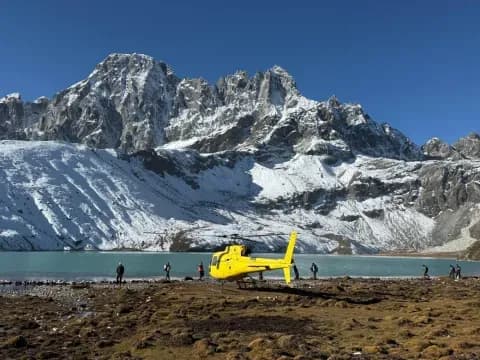
The helicopter offers a unique view of the Mustang region that is hard to get on a short road trip. Travelers can reach the Muktinath area much faster while seeing aerial views of the changing landscape, although the exact route, landing, and sightseeing opportunities still depend on weather, aircraft availability, and operating conditions.
Quick Summary
| Tour Detail | Information |
|---|---|
| Destination | Muktinath Temple, Mustang |
| Tour Type | Helicopter Darshan Tour |
| Starting Point | Kathmandu / Pokhara, depending on the package |
| Main Attraction | Muktinath Temple |
| Altitude | Approximately 3,800 meters |
| Major Highlights | Muktinath Temple, 108 Water Spouts, Jwala Mai Temple, Himalayan scenery |
| Flight Experience | Scenic aerial journey over the Himalayan landscape |
| Best For | Pilgrims, families, seniors, and travelers with limited time |
| Flight Duration | Varies according to the departure point and itinerary |
| Weather Dependency | Flights operate subject to suitable weather and visibility |
| Landing | Subject to weather, aircraft performance, and operating conditions |
| Booking Advice | Advance booking is recommended during busy pilgrimage and travel periods |
Muktinath Temple
Muktinath Temple is the main attraction of the Muktinath Helicopter Tour and an important pilgrimage site for Hindus and Buddhists. For Hindus, it is linked to Lord Vishnu and is seen as a sacred place of liberation and spiritual cleansing. Buddhists know it as Chumig Gyatsa, meaning “Hundred Waters.” Because it is important to both faiths, the temple has a special character, and visitors come here to pray, take part in rituals, and make pilgrimages.
Located at about 3,800 meters, Muktinath sits in the rugged Mustang region, surrounded by barren hills, deep valleys, and Himalayan peaks. Its high altitude gives the pilgrimage a special character, but visitors should be ready for colder weather and lower oxygen levels.
Traveling by helicopter greatly reduces travel time compared with a long road journey, making the tour convenient for pilgrims with limited time or those who prefer to avoid a lengthy overland trip. However, helicopter access to Muktinath still depends on weather, visibility, aircraft availability, and safe operating conditions.
108 Sacred Water Spouts
The 108 Sacred Water Spouts, or Muktidhara, are near Muktinath Temple in Mustang. Pilgrims bathe under each spout as part of a traditional ritual believed to have religious significance and to purify the body and spirit. For many Hindu pilgrims, completing this ritual is an important part of visiting Muktinath, and the site is also respected in Buddhist traditions.
The number 108 is important in Hinduism and Buddhism and appears in many religious practices, texts, and traditions. At Muktinath, the 108 water spouts are linked to purification, devotion, and pilgrimage. Visitors should also remember that the water is extremely cold because of the high altitude, and anyone considering the bathing ritual should take their physical condition into account.
Jwala Mai Temple
Jwala Mai Temple is an important religious site near Muktinath, known for its natural flame. The flame is traditionally linked to naturally occurring gas, water, and fire, creating a rare phenomenon in the temple area. For visitors, the site offers a different experience from the main Muktinath Temple, combining a religious setting with an unusual natural feature. Its location in the wider Muktinath pilgrimage area also makes it a convenient place to visit along with the temple and other nearby sacred sites.
The natural flame is important in both Hindu and Buddhist traditions and adds to the spiritual character that makes Muktinath a major pilgrimage site. Visitors often include Jwala Mai in their trip after visiting Muktinath Temple and the 108 sacred water spouts, so they can see several of the area's main religious attractions in one visit. Together, the temple, sacred water, natural flame, and Himalayan landscape give the Muktinath experience a deeper cultural and spiritual meaning beyond the main shrine.
Buddhist Monasteries and Muktinath's Religious Heritage
Buddhist Heritage of Muktinath
Muktinath is important in Tibetan Buddhist tradition and is known as Chumig Gyatsa, or “Hundred Waters,” in Tibetan. The area has Buddhist monasteries, prayer wheels, chortens, and other religious buildings that show its long Buddhist history. Monks and pilgrims visit these places to pray and practice, adding another part to the pilgrimage experience.
A Shared Hindu and Buddhist Pilgrimage Site
Muktinath is special because it is an important pilgrimage site for both Hindus and Buddhists. Hindus visit Muktinath Temple and the 108 water spouts as part of their religious pilgrimage, while Buddhists connect the site with sacred natural elements and Buddhist traditions. These traditions converge in the same pilgrimage area, making Muktinath a meeting point for two religious cultures.
Cultural Experience Beyond the Temple
Visitors can learn more about Muktinath by looking beyond the main shrine. Prayer flags, prayer wheels, monasteries, chortens, traditional buildings, and local religious rituals can be seen throughout the pilgrimage area. The surrounding landscape also adds to the experience, with the high-altitude setting, mountain trails, and nearby settlements offering a glimpse of Mustang’s culture and daily life.
Ranipauwa: The Gateway to Muktinath
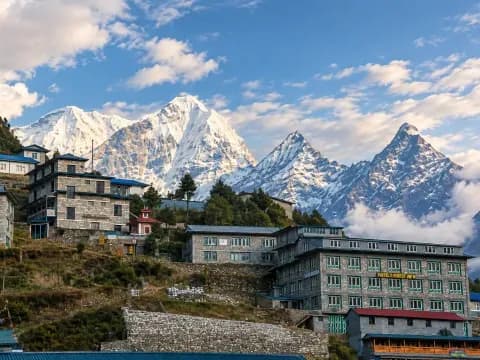
Ranipauwa is the main settlement for visitors to Muktinath in Nepal’s Mustang district. It is just below the temple complex and offers guesthouses, restaurants, and other services for pilgrims and tourists.
The settlement has local shops that sell religious items, souvenirs, and trekking essentials, as well as restaurants that serve Nepali and Tibetan-style meals.
Visitors can also find pilgrimage facilities and clear views of the surrounding Himalayan landscape, which add to the area’s atmosphere. For helicopter travelers, Ranipauwa often serves as the main arrival point before the short walk or transfer to Muktinath, although the exact landing location and transfer arrangements depend on the tour itinerary, weather, and operating conditions.
Annapurna, Dhaulagiri, Nilgiri, and Other Himalayan Views
Annapurna Mountain Views
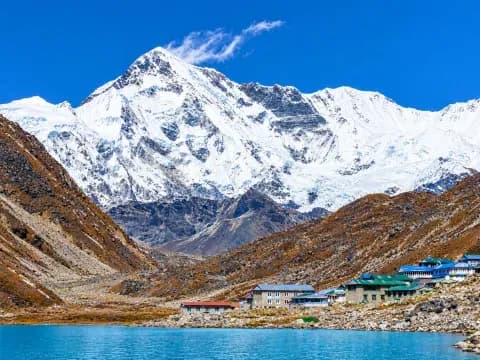
The Annapurna range is a major part of the Himalayan scenery around Mustang. Depending on the flight route and weather, passengers may see its peaks rising above deep valleys and mountain terrain. From a helicopter, the scale of the Annapurna massif is easier to appreciate as the aircraft moves between different elevations and viewpoints. Clear conditions can reveal snow-covered slopes and ridgelines across the horizon.
Dhaulagiri and Nilgiri
Dhaulagiri and Nilgiri are two important mountains seen around the Mustang region. Dhaulagiri rises to the southwest, while Nilgiri is closer to the Kali Gandaki area. A helicopter gives different views of these peaks as it moves through the valleys, showing how the mountains, ridges, and deep river valleys connect across the region.
Why Aerial Views Are Different
Helicopter travel gives a wider view than road travel because passengers can see mountain slopes, valleys, settlements, and ridgelines from above. The scenery also changes during the trip, from departure to the approach to Muktinath and on the return flight. However, mountain views depend on cloud cover, haze, wind, and other weather conditions. Even if conditions are clear in one place, clouds can block views elsewhere along the route.
Major Attractions at a Glance
| Attraction | Main Experience | Best Known For |
|---|---|---|
| Muktinath Temple | Pilgrimage | Hindu and Buddhist significance |
| 108 Water Spouts | Religious ritual | Sacred bathing |
| Jwala Mai | Religious visit | Natural flame |
| Buddhist Monastery | Cultural experience | Buddhist heritage |
| Kali Gandaki Valley | Scenic landscape | Dramatic Himalayan terrain |
| Shaligram | Religious significance | Sacred fossil stones |
| Ranipauwa | Local experience | Muktinath gateway |
| Himalayan Peaks | Mountain scenery | Annapurna, Dhaulagiri, Nilgiri |
| Mustang Landscape | Aerial sightseeing | Dry high-altitude terrain |
What Can You See During the Helicopter Tour of Muktinath Darshan?
A helicopter trip to Muktinath gives changing views as it flies from lower valleys to the high-altitude Mustang region. The scenery changes during the flight, with views of villages, river valleys, mountain slopes, and Himalayan peaks depending on the route and weather.
During Departure
The flight starts with views of the takeoff point as the helicopter rises above the area. As it climbs, the view opens up to show hills, valleys, settlements, and mountains.
During the Approach to Muktinath
As the helicopter approaches Muktinath, passengers may see the Kali Gandaki Valley, steep mountain slopes, and settlements in Mustang. Himalayan peaks may also be visible when the weather and visibility are good.
Around Muktinath
The area around Muktinath has a high-altitude mountain setting with dry terrain, religious buildings, and nearby peaks. Passengers can see the temple area, pilgrimage settlement, and surrounding mountains before or after the scheduled visit.
During the Return Flight
The return journey can show the landscape differently, depending on the route and visibility. Changes in the flight path, sunlight, and cloud cover may reveal more of the mountain ridges, valleys, and settlements along the way.
Conclusion
Muktinath is more than a single temple. Its religious heritage includes the 108 sacred water spouts, Jwala Mai Temple, Buddhist monasteries, and the Shaligram tradition linked to the Kali Gandaki River, while the surrounding Mustang landscape adds dramatic Himalayan scenery to the pilgrimage. A helicopter tour is a convenient way to see these attractions in less time, especially for travelers with limited time. The flight route, landing arrangements, and sightseeing time depend on weather, visibility, aircraft availability, and operating conditions, so travelers should confirm the details before departure.
Plan your trip with a clear itinerary and check the latest flight and weather conditions before you travel.
Share this post